


Silent Living at Sea: How to Enjoy Peaceful Nights at Anchor Without Generator Noise or Fumes
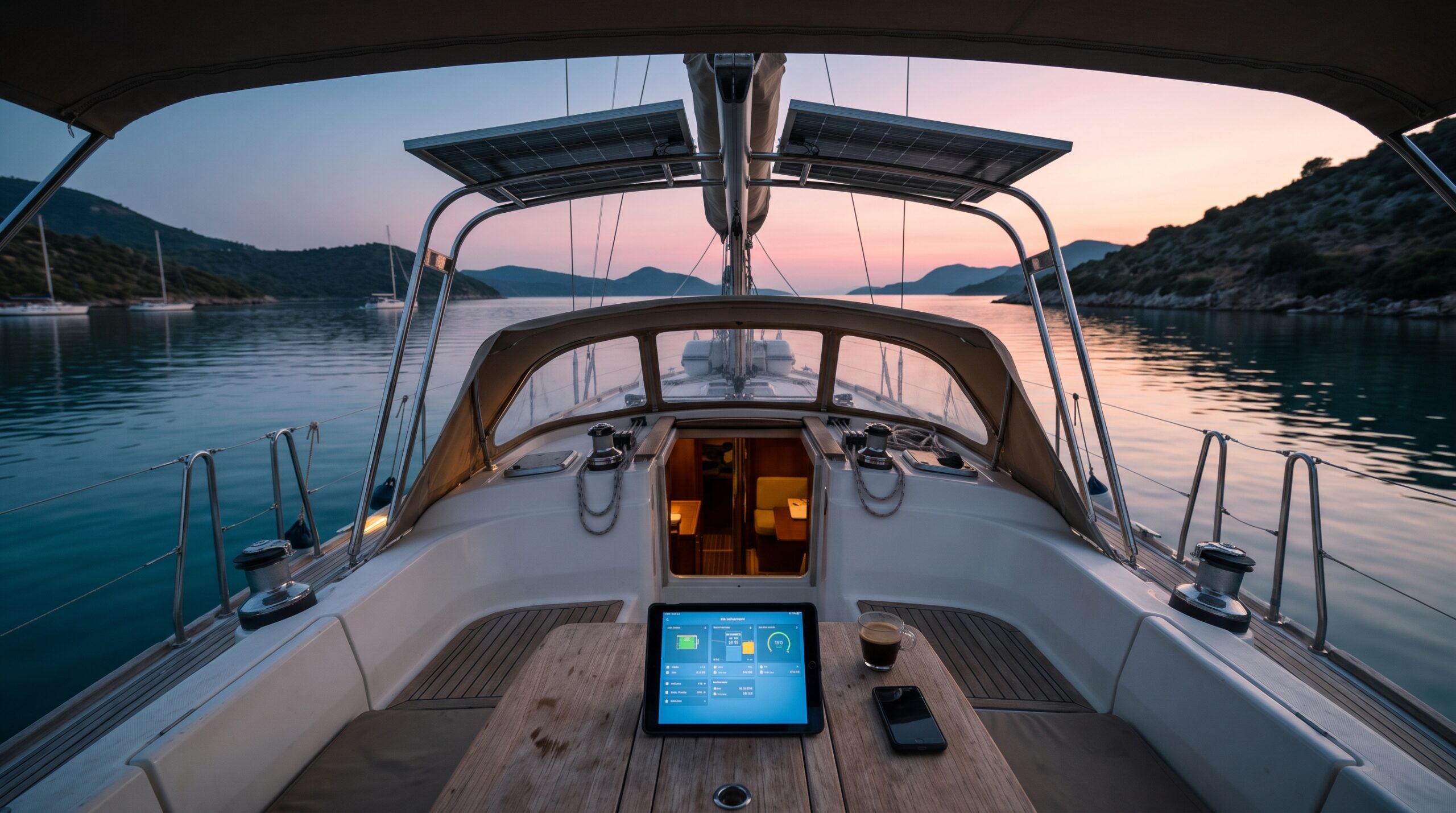
Few experiences compare to dropping anchor in a secluded Mediterranean bay at dusk. The water turns to glass, the evening breeze picks up, and the stars come into full view.
Then, right on cue, a dull hum shatters the calm. A diesel generator fires up nearby, vibrating through the hull, pushing exhaust fumes across the cockpit, and trading natural serenity for electricity.
For decades, running a noisy auxiliary generator was considered an inevitable tax for modern onboard comfort. If you wanted air conditioning on a sweltering summer night, a cold drink from the fridge, or clean power for espresso and inductive cooking, you put up with the drone and the diesel smell.
Today, that trade-off is obsolete. The shift toward silent living at sea, relying entirely on clean, quiet, and renewable energy systems, has turned off-grid anchoring into a true luxury experience.
The Generator Trap: Why the Old Formula No Longer Works
Traditional marine electrical setups rely on heavy lead-acid or AGM house battery banks. Because these batteries safely surrender only about 50% of their rated capacity before suffering irreversible damage, they drain quickly under continuous loads.
To keep high-draw appliances running, skippers are forced into a constant cycle of generator runs:
-
- Vibration and noise: Low-frequency engine rumble resonates through fiberglass hulls, disrupting sleep for everyone onboard.
-
- Exhaust and air quality: Harbor and bay air fills with diesel fumes that drift straight into companionways and cabins.
-
- Fuel and maintenance costs: Regular oil, impeller, and fuel filter changes, plus the ever-increasing cost of bunkered diesel.
-
- Anchorage etiquette: Running a genset through the night is increasingly frowned upon in quiet bays across the Greek islands and the broader Mediterranean.
Achieving true silence at anchor requires rethinking how power is generated, stored, and managed on board.
1. The Energy Core: High-Capacity LiFePO4 Chemistry
The foundation of a generator-free vessel is the shift to Lithium Iron Phosphate (LiFePO4) battery banks.
Unlike traditional marine batteries, lithium systems transform onboard energy storage:
-
- Full Depth of Discharge: You can comfortably use 80% to 90% of your rated capacity without degrading battery life, effectively doubling your usable amp-hours in the same physical footprint.
-
- Weight Reduction: LiFePO4 banks weigh roughly a third of equivalent lead-acid systems, reducing deadweight at the stern and improving boat trim and fuel economy under sail or power.
-
- Stable Voltage Under Heavy Loads: Inverters running induction cooktops, watermakers, or air conditioners draw hundreds of amps. Lithium maintains a stable 13V+ output throughout discharge, preventing low-voltage cutoffs and motor strain.
With an appropriately sized lithium bank managed by a dedicated Battery Management System (BMS), overnight air conditioning and all-electric galleys run cleanly through the night.
2. Silent Generation: Smart Solar Harvesting (MPPT)
Once power storage is solved, replenishing the bank silently during peak daylight becomes the next priority. Modern marine solar arrays—mounted seamlessly on biminis, solar arches, or hardtops—capture abundant Mediterranean sunlight all season long.
The critical link is the solar charge controller:
-
- Standard solar controllers (PWM) bleed off excess panel voltage as heat, forfeiting valuable energy.
-
- High-speed MPPT (Maximum Power Point Tracking) controllers continuously sweep voltage curves to deliver up to 30% more energy to the batteries.
-
- Rigging, booms, and sails routinely cast shifting shadows across deck panels. Ultra-fast MPPT algorithms adjust in milliseconds to extract every available watt, even in partial shade.
By midday, quiet solar generation can completely offset daytime refrigeration, navigation instruments, and stereo loads while actively recharging the house bank for the evening.
3. Smart Hybrid Management: Clean Inverter-Chargers
Running domestic 230V appliances requires converting battery power seamlessly via an advanced pure sinewave inverter-charger.
Modern units do far more than convert DC to AC:
-
- Silent Pass-Through & Inversion: High-efficiency operation without high-pitch electrical hums or aggressive cooling fan cycles.
-
- Dynamic Assist: When you do hook up to weak marina shore power (often limited to 4A or 6A on small island quays), hybrid inverters dynamically blend stored battery power with shore power to prevent dock breakers from tripping during peak usage.
-
- Smart Alternator Charging: While under way, dedicated DC-DC chargers pull clean, regulated power from your main engine’s alternator directly into your lithium house bank without risking alternator overheating.
4. Visibility and Control Right from Your Pocket
Operating an off-grid yacht should never involve guesswork. A central battery shunt connects your power setup to a unified monitoring network.
Using real-time telemetry on an onboard display or via Bluetooth on your smartphone or tablet, you can verify:
-
- Exact remaining battery percentage (State of Charge).
-
- Current live draw from all active appliances.
-
- Real-time solar harvest input.
-
- Precise hours of remaining autonomy based on current consumption.
No calculating voltages, no checking dipsticks, and no wondering whether the fridge will last until sunrise.
Quiet Waters, Pure Freedom
The real luxury of modern yachting isn’t measured in generator kilowatts; it’s measured in undisturbed silence. Watching the sunrise from the cockpit with a fresh espresso, powered entirely by yesterday’s sunshine and silent lithium storage, changes how you experience the sea.
To explore engineered marine power solutions, high-efficiency solar chargers, and robust lithium storage systems built for Mediterranean conditions, explore the complete lineup of Victron Energy systems at Pharos Marine and set course for your quietest season yet.