A crisp Ionian morning — why your controller choice matters
Imagine panels chilled by a morning breeze, Voc climbing above their rated voltage and the sun still low on the horizon. That extra voltage is usable energy — but only if your regulator can turn it into charging current. That’s the practical difference with MPPT: it harvests what a simple clamp-style regulator throws away. Read on and you’ll be able to size a controller, compare the specs that matter at sea, and run a short buying and installation checklist. If you’d rather hand the work to a trusted local partner, Pharos Marine Electronics stocks vetted MPPT units and offers professional sizing and installation.
Why MPPT controllers matter — the practical payoff
An MPPT solar charge controller uses a maximum-power-point tracker to convert higher panel voltage into additional charging current at the battery, rather than simply clamping panel output to battery voltage like a PWM device. In plain terms: you get more amps into the bank without adding panels.
In real-world tests MPPT systems typically deliver 15–30% more energy than PWM in cold or low-light conditions; the advantage shrinks in very hot climates because panel Voc falls closer to battery voltage. The technical reason is simple: solar cells produce higher open-circuit voltage (Voc) as they cool — MPPT converts that extra voltage into current, PWM wastes it.
When is MPPT essential? If your array is larger than roughly 200 W, if you wire panels in series with high Voc, or if you need efficient harvest in low light or long winters (cruisers, shaded decks, remote cabins), MPPT is the practical choice. A final note: manufacturers report high efficiencies, but real-world tracking speed, low-light behaviour and how a model derates under heat matter as much as the peak efficiency number.
Sizing an MPPT the right way — formulas and worked examples
Work through three checks in order: (1) PV Voc vs controller PV limit with a cold-weather margin; (2) PV Isc against controller Isc; (3) the continuous charge current required, with a margin for inefficiency and future expansion.
Typical Plain formulas (use the panel datasheet and your intended array configuration):
Total Voc check: Total Voc = (Voc per panel × number in series) × 1.2 — choose a controller with PV input > Total Voc.
PV Isc check: Total Isc = Isc per panel × number of parallel strings — keep below controller PV Isc limit.
Output current sizing: Required A = (Total array watts ÷ battery charge voltage) × 1.25 — round up to the next common controller size.
Two short worked examples:
Small dayboat: 200 W array to a 12 V bank charged at ~14.4 V. 200 ÷ 14.4 = 13.9 A × 1.25 = 17.4 A → choose a 20–30 A MPPT.
Cruising catamaran: 800 W array to a 24 V bank charged at ~29.4 V. 800 ÷ 29.4 = 27.2 A × 1.25 = 34.0 A → choose a 40–60 A MPPT.
Practical sizing tips: follow the manufacturer’s guidance on array-overpanelling (many permit 110–125% array watts vs controller-rated output), but always keep PV string Voc comfortably under the controller’s max using the cold margin. Leave headroom for future expansion and round up to the next standard controller size rather than pushing a device to its absolute limit.
For a step-by-step example specific to Victron MPPT sizing, consult this Victron MPPT sizing guide which walks through the Voc and current checks with worked numbers.
Top MPPT picks for 2026 — honest choices by amp class and use case
Below are curated choices across quality tiers. Each pick highlights the trade-offs you’ll notice on the boat: monitoring, ruggedness, or price.
Premium / monitoring-focused Victron SmartSolar MPPT 150/45, 150/60, 150/70 (and higher-output SmartSolar variants). Spec highlights: up to 45–70 A charge current, PV input rated to 150 V (model-dependent), excellent Bluetooth app and VE.Direct/VRM integration. Pros: best-in-class remote diagnostics and firmware support. Con: higher cost than basic units.
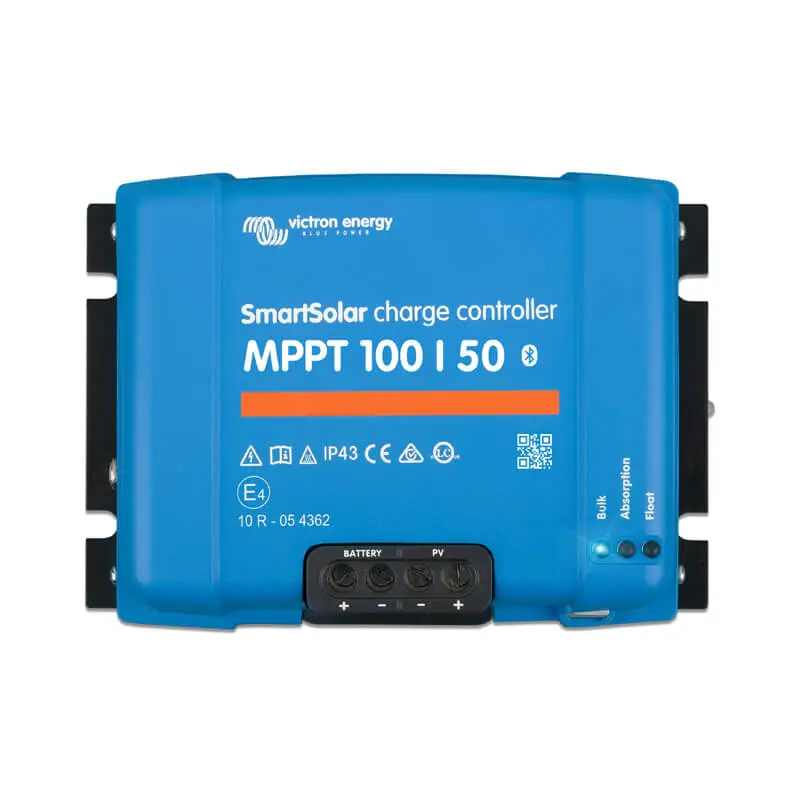
If you need slightly lower-amp or more budget-friendly Victron options, consider the Victron Smartsolar MPPT 100/50 or the compact Victron Smartsolar MPPT 100/30 models for smaller boats and installations. Vendor technical specifications for the SmartSolar line are useful when comparing PV Voc limits and thermal derating — see the Victron SmartSolar technical specifications.
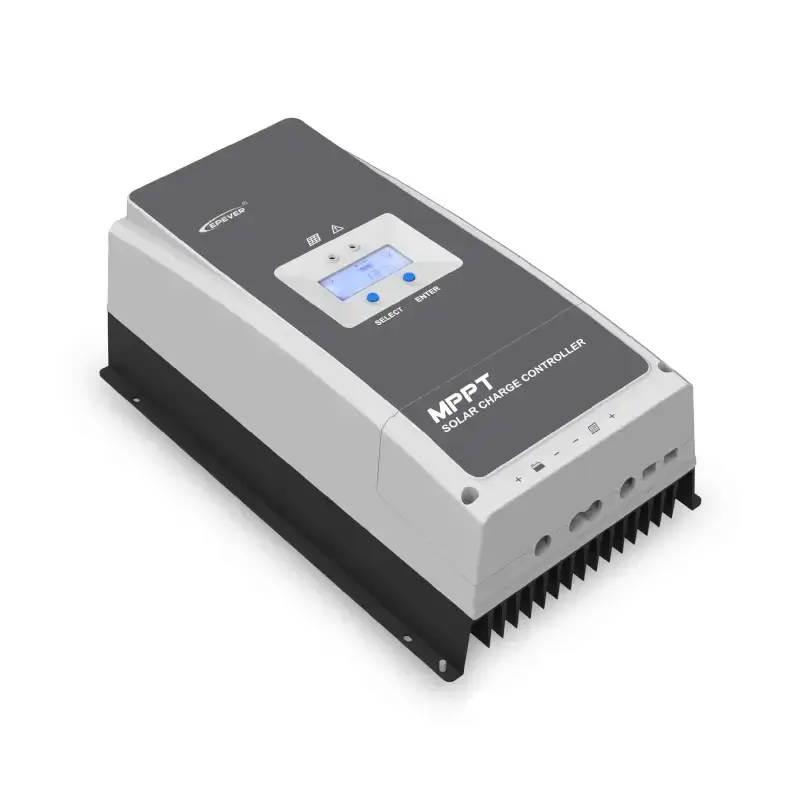
Value and widely available Epever MPPT 80A 12/24V Tracer series. Spec highlights: common amp ratings (20–100 A depending on model), affordable pricing, basic protection features. Pros: attractive for DIY or budget builds. Con: variable long-term reliability and warranty coverage — verify local support before buying.
How to choose in one line: pick Victron for monitoring and support, Epever MPPT only if budget and local warranty are acceptable.
| Controller | Max charge current | PV Voc limit | Bluetooth / logging |
| Victron SmartSolar 150/60 | 60 A | Up to 150 V | Bluetooth (VictronConnect), VE.Direct, VRM |
| Victron SmartSolar 150/70 | 70 A | Up to 150 V | Bluetooth, VE.Direct |
| EPEVER / Tracer | 20–100 A (model dependent) | Varies by model | Some models offer Bluetooth |
Which features actually matter — prioritising by use case
Not every feature is worth the price for every installation. Prioritise what protects the battery and reduces downtime.
Battery chemistry profiles and programmable charge algorithms are top priority — incorrectly configured charging quickly shortens battery life, especially for LiFePO4 banks. Temperature compensation and a battery temperature sensor are essential in cold or variable engine-room environments; they prevent under- or over-charging and improve daily harvest.
Bluetooth and data logging pay for themselves on remote boats and cabins by saving diagnostic trips. Max PV Voc and input voltage capability determine how you can wire panels (series strings) and whether you can safely use higher-voltage arrays. Continuous charge current and the unit’s thermal derating tell you whether a model will sustain rated output in hot conditions. Multi-MPPT inputs and synchronous operation are valuable where arrays are split by orientation or shading; diversion outputs help cabins divert excess to heaters or loads without an inverter.
For compact installations where 48 V operation or smaller currents are needed, the Victron Smartsolar MPPT 100/20 (up to 48V) is an example of a model that supports higher nominal battery voltages in a small package.
Quick mapping: RVs need battery profiles and temp compensation first, remote cabins add Bluetooth/logging, and home-backup systems benefit from multi-MPPT inputs and higher continuous current ratings.
Buying and installation checklist — confirm these before you buy (and before you switch it on)
Pre-purchase checks:
- Confirm battery nominal voltage (12/24/48 V) and chemistry; ensure the controller supports the chemistry and voltage.
- Calculate Total Voc using the cold-weather margin (Voc × series × 1.2) and keep it below the controller’s PV Voc rating.
- Sum panel Isc for parallel strings and verify it’s under the controller’s PV Isc limit.
- Compute required charge amps: (Array watts ÷ battery charge voltage) × 1.25 and select the next common controller size.
- Check monitoring and communications (Bluetooth, VE.Direct, Modbus) if remote diagnostics matter; confirm local warranty and support.
Installation essentials:
- Mount the controller close to the battery in a ventilated, dry spot; use corrosion-resistant fastenings and glanded cable entry.
- Use the correct cable gauge, keep DC runs short, and install DC fusing on the battery output and PV-side protection where parallel strings exist.
- Fit a battery temperature sensor and program the correct battery type before connecting PV.
- Commission in daylight: verify charge profiles, check logs, and test isolation switches and labelled fuses.
If this sounds too close for comfort, book a professional installation; marine wiring and corrosion control are where lives and vessels are kept safe.
Where to buy and next steps — Pharos Marine Electronics
Pharos Marine Electronics is an authorised partner & dealer for leading marine power brands and can size and source the right MPPT for your boat. We carry Victron and trusted alternatives, provide genuine parts, and offer professional installation and commissioning. Our checkout is secure, delivery is free for orders over €300, and we offer a seven-day money-back guarantee.
Fast routes: if you already have panel specs, email or message us the panel Voc and Isc, total array watts and battery voltage. We’ll reply with two recommended controllers — one conservative choice and one with expansion headroom — and an installation estimate. If you want an independent comparison of charge-controller options before you commit, several review round-ups list common choices and practical pros/cons; a concise buyer’s guide can help you match features to your use case.
If you prefer us to do the math, include your panel datasheet and battery spec when you get in touch and we’ll confirm Total Voc, Isc and recommended controller sizes.
Conclusion — the practical takeaway
MPPT regulators pay for themselves when the array or conditions make voltage conversion worthwhile: cold mornings, low light, and systems above ~200 W. Size for Voc and Isc first, then for continuous charge current with a 25% margin, pick a reputable brand with local support, and favour correct installation over chasing the cheapest amp rating.
Use the checklist, choose a controller with headroom, and if you prefer local support, contact Pharos Marine Electronics for a sizing call, parts and professional installation.